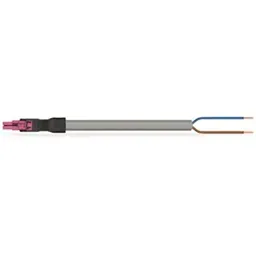
Cable assembly WINSTA ® MINI with protection against mismating The WINSTA ® MINI cable assembly B coding supports fast, reliable installation. WAGO pluggable installation connectors can be used when specifications repeat or are planned on a specified grid, for example for installing grid lighting or flush-mount lighting. The coding options reduce installation errors, allowing fast, secure wiring of all components. The pluggable installation connector offers protection against contact with wires or tools if they are smaller than 1 mm in accordance with protection type IP40. B coding enables the WINSTA ® MINI pluggable installation connectors to be used for control in applications in automation, mechanical engineering and robotics. WINSTA ® MINI is our response to the trend toward miniaturisation. Our smallest pluggable connection system is very good for lights, for example, since due to LED technology, these offer much less space for the connection technology. According to the European CPR, the fire class of the cables used in construction is decisive for the safety of buildings, too. For buildings with medium-level safety requirements, cable assemblies with fire class E are suitable. Fast, error-free assembly thanks to cable assemblies from WAGO The cable assembly is provided with a socket and a free end. The WINSTA® Pluggable Connection System is ideally tailored to the strict requirements of building installation. It makes electrical installation pluggable, and thus faster, more reliable, and error-free. Use of this pre-assembled system reduces assembly times and errors during installation at the construction site. Choose quality and durability – with protection type IP40 from WAGO makes the electrical installation of electrical components noticeably easier. pluggable installation connectors with protection against mismating easy tool-free operation, a wide range of coding options with B coding for use in process automation, such as lighting technology, for example flexible installation to save space quick replacement of defective units during ongoing operation